
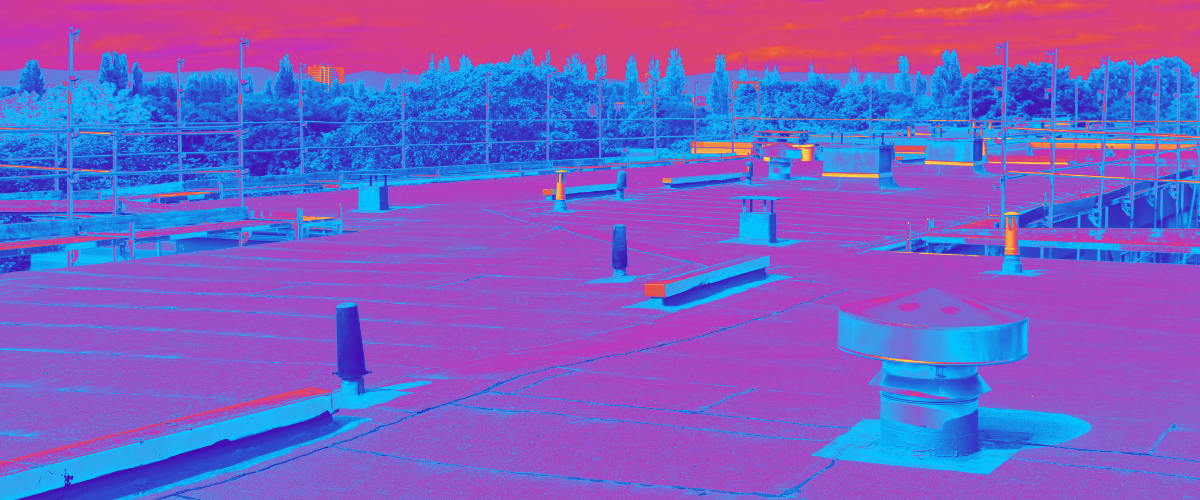
Many commercial roofs in Kansas appear structurally sound on the surface—but hidden moisture can silently degrade insulation and decking. Without moisture mapping, building owners risk coating over damage that will only worsen.
What Is Roof Moisture Mapping?
Roof moisture mapping is the process of identifying trapped moisture beneath the roof membrane. This is typically done using infrared thermal imaging, nuclear gauges, or electrical capacitance meters.
Why It Matters for Commercial Buildings
Commercial buildings have large surface areas, making them particularly vulnerable to undetected leaks or ponding water. Moisture can compromise insulation (reducing energy efficiency), create mold risk, and lead to premature failure—even under a new coating system.
Infrared vs. Capacitance: The Tools of the Trade
- Infrared scanning detects temperature differences that indicate moisture presence.
- Capacitance meters measure dielectric properties to locate water pockets.
- Nuclear gauges are highly accurate but require special handling due to radiation.
Extend Life and Avoid Expensive Surprises
Mapping ensures your restoration investment is going toward a dry, stable roof—saving you from doing it twice. According to the National Roofing Contractors Association (NRCA), proper moisture inspection is a required best practice before coatings are applied.